
Most popular articles
.jpg "Eleanora Saghatelyan depicts sufferings of displaced Artsakh Armenians through abstract art")
Eleanora Saghatelyan depicts sufferings of displaced Artsakh Armenians through abstract art
Eleanora Saghatelyan is a clinical psychologist and psychotherapist. In recent years, the people who most often seek her help are forcibly displaced Artsakh Armenians, who come to her to share their stories, grief and trauma.
That pain is not foreign to her. In 1989, she and her family fled from Gandzak to Armenia “with nothing but the clothes on our backs”, an experience that mirrors the displacement of Artsakh Armenians.
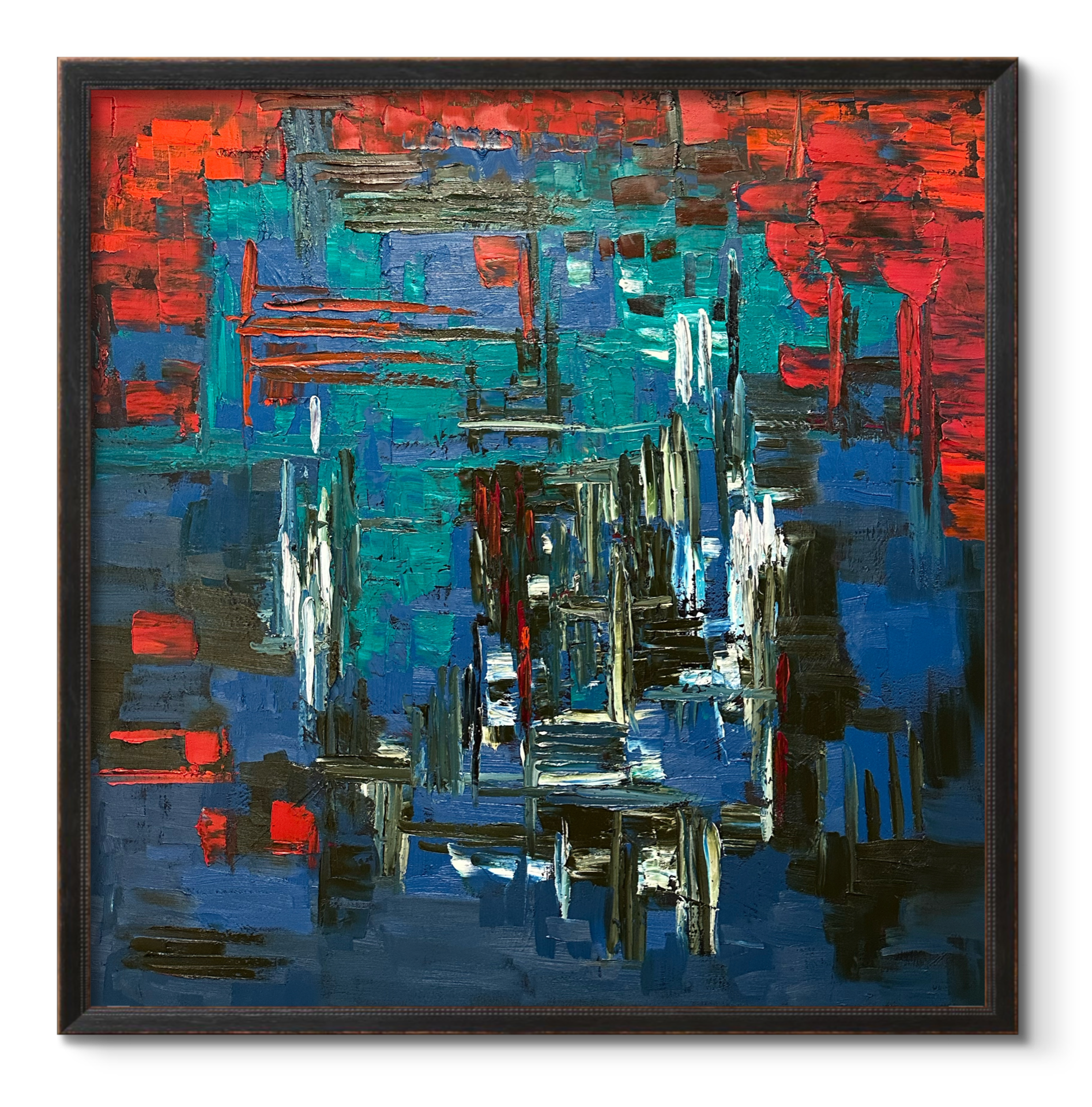
After countless conversations with her patients, listening to stories of loss, fear and survival, Saghatelyan found a new language of expression: painting. Through abstract art, she transforms their trauma into images, conveying in colors and forms what words often cannot.
“I had never held a brush in my life. I used to look at artists with admiration,” she told Panorama.am in an interview on Friday. “One day I saw short videos of people painting. I went to a store, bought acrylics and started painting. My works are a cry in response to what I’ve heard and felt from them, combined with my own life experience.”
On September 19, Saghatelyan’s exhibition Catharsis opened at the Armenian General Benevolent Union (AGBU) in Yerevan. The 22 canvases on display narrate the traumas of displaced Artsakh Armenians. The date of the opening is symbolic: on September 19, 2023, Azerbaijan launched a large-scale attack on Artsakh, which forced the Armenian population to flee their homeland.
“Catharsis means release. In psychology, it’s about healing,” she explains. “For me, it was a way to cleanse and recover. I take their pain and hand it over to the canvas.”
Most of her patients suffer from post-traumatic stress disorder (PTSD). More recently, panic attacks have become especially common. “They don’t know what the future holds for them. There is a deep lack of trust and stability,” she notes.
Her patients range in age from four to fifty-five. Many children carry scars of war in ways that are heartbreaking to witness. “Some would hide under the table when it rained, because during the shelling their parents told them, ‘Don’t be afraid, it’s just raining.’”
Saghatelyan admits the most difficult cases are those who have lost loved ones. “Even those who haven’t lost anyone often say, ‘Our losses are nothing compared to others.’ But working with grief is the hardest part.”
At first, many displaced people are hesitant to open up as most of them never visited a psychologist before. “The first five minutes are always tense. But when I tell them they can speak in their Artsakh dialect, the wall collapses instantly,” she recalls.
She remembers vividly the story of a 12-year-old boy: “He was carrying a weapon for his father when he came across an Azerbaijani soldier. If he hadn’t fired first, he would have been killed. He shot and survived, but he was devastated by the fact that he had killed someone. He kept saying, ‘I killed a man.’ It didn’t matter to him that it was an enemy. It was heavy work, but he eventually managed to come out of that state.”
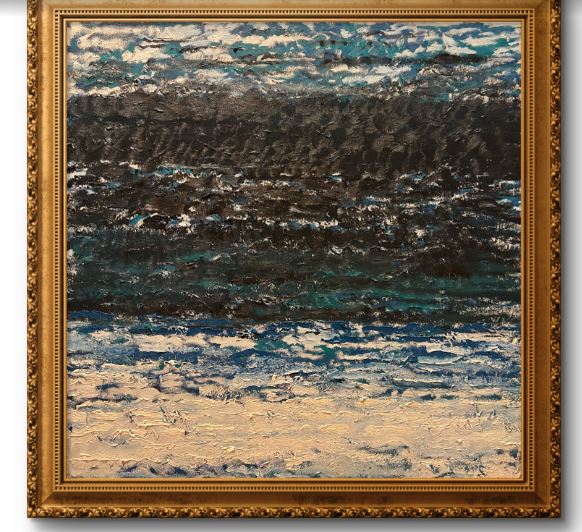
The exhibition carries a philanthropic mission. The proceeds from the paintings sold during and after the event will be used to cover tuition fees for young Artsakh Armenians.
“I have my own hero of the war, Sergey Atanyan. I never met him personally, but I learned his story from his relatives,” the phycologist says. “He and four others fought to the very end, sacrificing their lives so that 200 villagers could be evacuated. He dreamed of becoming a doctor. Sadly, he did not live to fulfill that dream. In his name, I established a charitable foundation. The funds will go to children from large displaced Artsakh families who are in need of financial support for their education.”

 Studio One