
Most popular articles
.jpg "Azerbaijani media target Armenian lawyer over criticism of wine label")
Azerbaijani media target Armenian lawyer over criticism of wine label
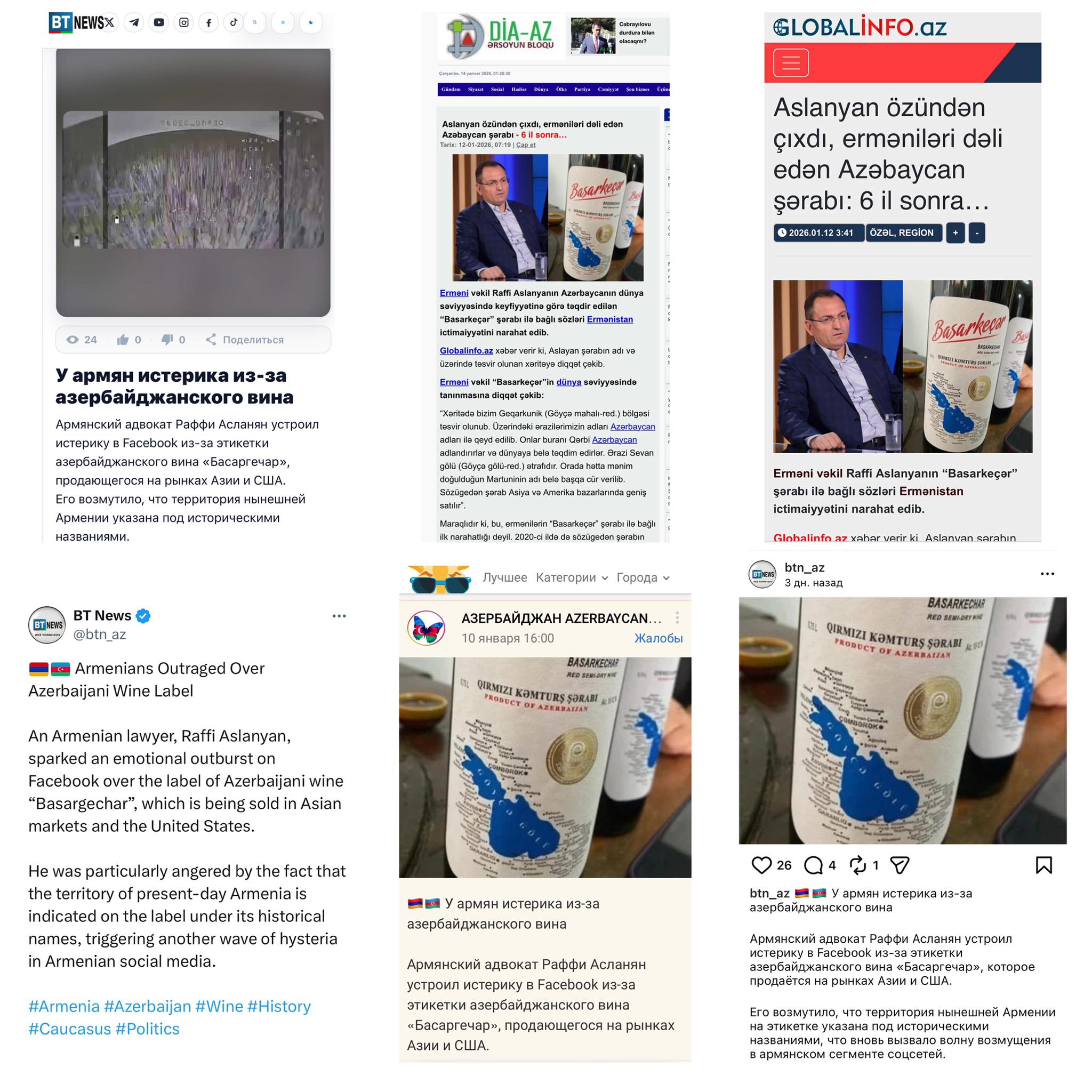
Azerbaijani media outlets have lashed out at Armenian lawyer Raffi Aslanyan after his criticism of an Azerbaijani-produced wine label depicting parts of Armenia as Azerbaijani territory. Aslanyan claims the label demonstrates that Baku’s objectives toward Armenia remain unchanged despite official statements about pursuing peace.
Speaking to Panorama.am on Thursday, Aslanyan argued that Azerbaijan’s policies toward Armenia contradict its public messaging about a peace settlement following decades of conflict.
His comments followed a Facebook post in which he highlighted the label of Basarkecar wine produced in Azerbaijan and sold in Asian and U.S. markets. According to Aslanyan, the label shows Armenia’s Gegharkunik Province as "Western Azerbaijan", refers to Lake Sevan as “Goycha” and uses Azerbaijani names for several Armenian towns and villages.
“People are being asked to believe that peace can be built on this basis,” Aslanyan wrote, accusing Azerbaijan of advancing territorial claims through commercial branding.
After the post circulated, several Azerbaijani websites and social media pages shared Aslanyan’s remarks, describing what they called “hysteria in Armenia over a wine label”.
Aslanyan said the response resembled reactions he often encounters from supporters of Armenian Prime Minister Nikol Pashinyan when he criticizes the government.
“Azerbaijanis view Pashinyan as a key tool for seizing Armenia,” he claimed. “ Any attempt to take that tool away provokes an uproar.”
He added that Azerbaijani media coverage focused on discrediting critics rather than addressing the allegations.
“Nowhere do they state, for example, ‘we have no claims to Armenia’s sovereign territory,’” Aslanyan said. “There is no such message across their media space.”
Azerbaijan has long promoted the concept of “Western Azerbaijan” to describe parts of present-day Armenia.
While noting that the wine has been produced for several years, Aslanyan argued that its continued sale with such labeling undermines peace claims.
“If we are truly moving toward peace, why are these labels still being produced?” he asked.

 Studio One